Roof Size Calculator: Find Your Roofing Area

Updated on 30-May-2026

Calculate total roof area using roof length, width, and pitch. Easy roof size calculator for estimating roofing materials and sloped roof surface area.


Result
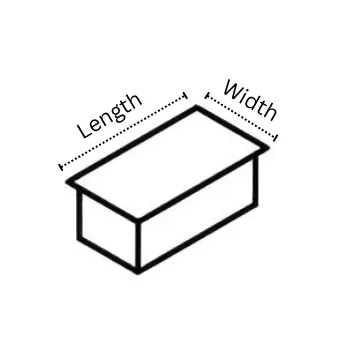
Roof Size Diagram

A Roof Size Calculator helps estimate the total roof surface area based on roof dimensions and pitch. This is useful for planning roofing projects, estimating material requirements, and calculating labor or installation costs.

The calculator uses three simple inputs:

  • Roof Length
  • Roof Width
  • Roof Pitch

The result gives the adjusted roof area that accounts for the roof slope.

What Is Roof Pitch?

Roof pitch represents the steepness of a roof. It is commonly written as a ratio such as 4:12, 6:12, or 8:12. A higher pitch means a steeper roof and a larger actual surface area.

For example:

  • 4:12 pitch means the roof rises 4 inches for every 12 inches of horizontal run.
  • 8:12 pitch means the roof rises 8 inches for every 12 inches of horizontal run.

Formula Used in Roof Size Calculator

Step 1: Calculate Base Roof Area

The flat roof area is calculated by multiplying roof length by roof width.

Formula:

Base Roof Area=Roof Length×Roof Width\text{Base Roof Area} = \text{Roof Length} \times \text{Roof Width}

Step 2: Calculate Roof Pitch Multiplier

The pitch multiplier adjusts the flat area to reflect the actual sloped surface area.

Formula:

Pitch Multiplier=1+(Pitch12)2\text{Pitch Multiplier} = \sqrt{1 + \left(\frac{\text{Pitch}}{12}\right)^2}

Step 3: Calculate Total Roof Area

Multiply the base roof area by the pitch multiplier.

Formula:

Roof Area=Base Roof Area×Pitch Multiplier\text{Roof Area} = \text{Base Roof Area} \times \text{Pitch Multiplier}

Example Calculation

Given Values

  • Roof Length = 40 ft
  • Roof Width = 30 ft
  • Roof Pitch = 6:12

Step 1: Base Roof Area

Base Roof Area=40×30\text{Base Roof Area} = 40 \times 30

Base Roof Area=1200 sq ft\text{Base Roof Area} = 1200 \text{ sq ft}

Step 2: Pitch Multiplier

Pitch Multiplier=1+(612)2\text{Pitch Multiplier} = \sqrt{1 + \left(\frac{6}{12}\right)^2}

Pitch Multiplier=1+0.25\text{Pitch Multiplier} = \sqrt{1 + 0.25}

Pitch Multiplier1.118\text{Pitch Multiplier} \approx 1.118

Step 3: Total Roof Area

Roof Area=1200×1.118\text{Roof Area} = 1200 \times 1.118

Roof Area1341.6 sq ft\text{Roof Area} \approx 1341.6 \text{ sq ft}

Why Use a Roof Size Calculator?

  • Quickly estimate roof surface area
  • Helps determine roofing material quantities
  • Useful for shingles, metal roofing, and underlayment calculations
  • Saves time during project planning
  • Reduces material waste and cost estimation errors

FAQs About Roof Area Calculation

1. How do you calculate roof area?

Roof area is calculated by multiplying the roof length by the roof width and then adjusting the result using the roof pitch factor. This gives the actual sloped surface area instead of just the flat footprint.

2. Why does roof pitch matter in roof area calculation?

Roof pitch affects the total surface area because a steeper roof has more surface coverage than a flat roof with the same dimensions. Higher pitch values increase the actual roofing area.

3. What is a roof pitch ratio?

A roof pitch ratio describes how much the roof rises vertically for every 12 inches of horizontal run. For example, a 6:12 roof pitch means the roof rises 6 inches for every 12 inches.

4. Can I calculate roofing materials using roof area?

Yes. Once you know the total roof area, you can estimate roofing materials such as shingles, metal panels, underlayment, and roofing squares needed for the project.

5. What unit is used for roof area measurement?

Roof area is commonly measured in square feet or roofing squares. One roofing square equals 100 square feet of roof surface.