How long does a rubber roof last?
A rubber roof lasts 25–30 years on average, with some lasting 40+. Learn what affects EPDM lifespan, maintenance tips, and when to replace it.
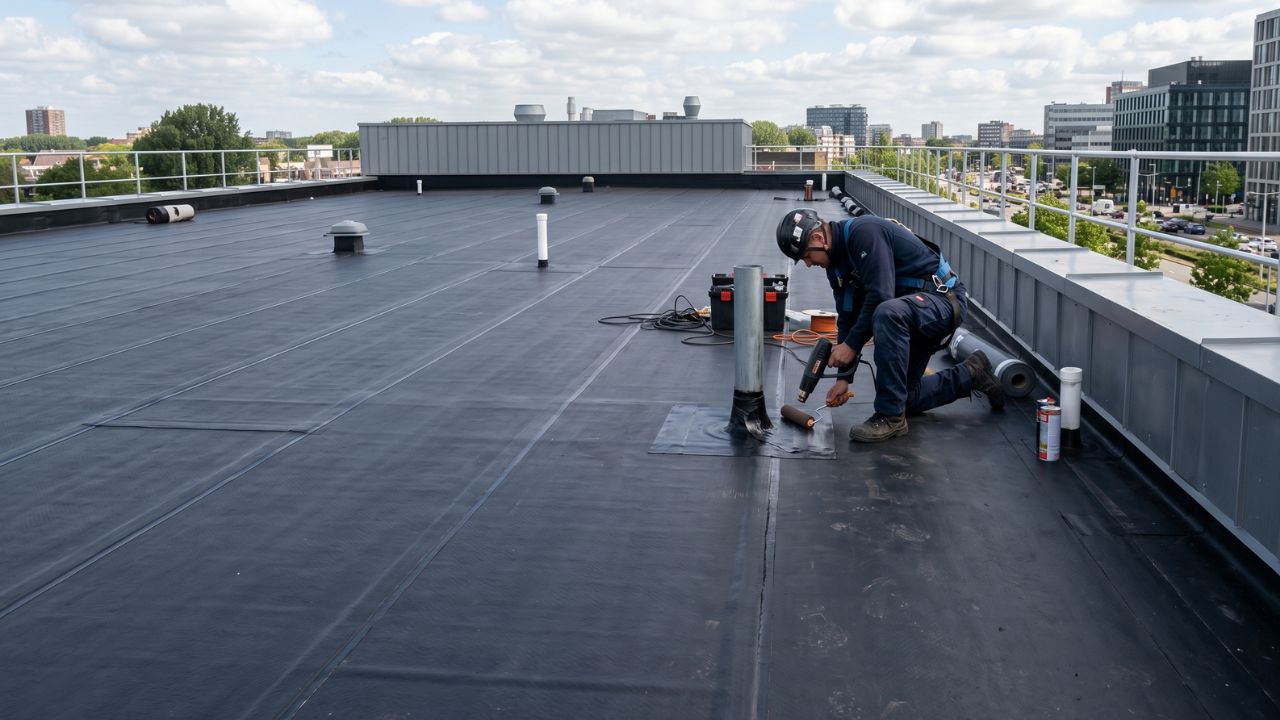
Quick Answer: A rubber roof (EPDM) typically lasts 25 to 30 years with proper installation and routine maintenance. Some well-maintained rubber roofs have lasted 40+ years. Lifespan depends on membrane thickness, UV exposure, installation quality, and how often the roof is inspected and maintained.
If you're considering a rubber roof — or you already have one and want to know what to expect — lifespan is the first question most building owners ask. Rubber roofing (most commonly EPDM) has earned a strong reputation for durability, but how long it actually lasts depends on several factors that are worth understanding before you invest.
This guide covers everything you need to know: typical lifespan by rubber roof type, what shortens it, what extends it, signs it's time to replace, and how to get the most years out of your roof.
What Is a Rubber Roof?
The term "rubber roof" most commonly refers to EPDM (Ethylene Propylene Diene Monomer) — a synthetic rubber membrane widely used on flat and low-slope commercial and residential roofs. It comes in large rolls and is installed in one of three ways: fully adhered, mechanically fastened, or ballasted (held down with stone or pavers).
Other roofing materials sometimes called "rubber roofs" include:
- TPO (Thermoplastic Polyolefin) — a white reflective membrane, technically a thermoplastic but often grouped with rubber roofing
- PVC (Polyvinyl Chloride) — another thermoplastic single-ply membrane
- Modified Bitumen — an asphalt-based system with rubber modifiers (APP or SBS)
- Rubber shingles — made from recycled tires, used on sloped residential roofs
This article focuses primarily on EPDM, with lifespan comparisons for the other types.
How Long Does a Rubber Roof (EPDM) Last?
| Rubber Roof Type | Average Lifespan | With Excellent Maintenance |
|---|---|---|
| EPDM (rubber) | 25–30 years | 40+ years |
| TPO | 20–30 years | 30–35 years |
| PVC | 20–30 years | 30+ years |
| Modified Bitumen | 15–20 years | 25 years |
| Rubber Shingles | 30–50 years | 50+ years |
EPDM consistently outperforms many roofing materials on a cost-per-year-of-service basis, which is a big reason it remains the most widely installed flat roofing system in North America.
Factors That Affect How Long a Rubber Roof Lasts
1. Membrane Thickness
EPDM membranes come in two standard thicknesses: 45 mil and 60 mil. The thicker 60 mil membrane is significantly more resistant to punctures, foot traffic, and UV degradation. For commercial roofs or any roof with regular maintenance foot traffic, 60 mil is the better long-term investment.
- 45 mil EPDM: 20–25 years typical lifespan
- 60 mil EPDM: 25–35 years typical lifespan
2. Installation Quality
No factor matters more than installation. Improper seam adhesion, inadequate flashing around penetrations (pipes, HVAC units, skylights), and poor drainage design are the leading causes of premature rubber roof failure. A poorly installed 60 mil EPDM can fail in under 10 years, while a properly installed 45 mil system can last 30.
Always hire a contractor who is certified by the membrane manufacturer and has documented experience with EPDM installation.
3. UV Exposure and Climate
EPDM is naturally UV-resistant — better than many other roofing membranes — but prolonged sun exposure still causes gradual oxidation and surface chalking over time. In very high UV climates (Southwest U.S., southern states), lifespan can be slightly shorter without additional UV-protective coatings.
Cold climates are generally kinder to EPDM. The material remains flexible at low temperatures, making it less prone to cracking in freeze-thaw cycles compared to other membranes.
4. Ponding Water
Flat roofs that hold standing water for more than 48 hours after rain are at significant risk. Persistent ponding accelerates membrane degradation, adds structural load, and promotes algae and moss growth. Proper drainage design — correct slope, functional drains and scuppers — is essential to maximizing EPDM lifespan.
⚠️ Important: If your rubber roof has areas where water ponds regularly, address the drainage issue immediately. Ignoring it is one of the fastest ways to cut your roof's lifespan in half.
5. Foot Traffic and Punctures
EPDM is durable but not impervious to mechanical damage. HVAC technicians, maintenance crews, or anyone regularly walking the roof can cause small punctures that, if left unrepaired, allow water infiltration. Installing walk pads in high-traffic areas is a simple, low-cost way to protect the membrane.
6. Maintenance Frequency
Rubber roofs that receive regular inspections and prompt minor repairs consistently outlast neglected ones by 5–10 years. It's that simple. Small issues — a lifted seam, a minor puncture, debris buildup around drains — cost very little to fix when caught early. Left alone, they lead to water infiltration, insulation damage, and eventually deck rot.
How to Extend the Life of Your Rubber Roof
Follow these maintenance practices to get the maximum lifespan from your EPDM roof:
- Inspect twice a year — spring and fall. Also inspect after major storms.
- Clear drains and gutters of leaves, debris, and standing water.
- Check and reseal seams and flashings — these are the most common failure points.
- Repair punctures promptly with EPDM patch kits. Even small holes allow water under the membrane.
- Install walk pads wherever technicians regularly access the roof.
- Apply an EPDM roof coating every 10–15 years to restore flexibility and add UV protection.
- Remove debris like branches and pooled dirt that retain moisture against the membrane.
- Hire a professional inspection every 3–5 years for a thorough assessment.
💡 Pro Tip: An EPDM roof coating (liquid rubber or elastomeric coating) applied around the 15-year mark can add 10+ years to the roof's life and improve energy efficiency. It's far cheaper than a full replacement.
Signs Your Rubber Roof Needs to Be Replaced
Even a well-maintained rubber roof will eventually reach the end of its service life. Watch for these warning signs:
- 🔴 Widespread cracking or brittleness — the membrane is oxidizing and losing flexibility
- 🔴 Persistent leaks despite repeated repairs — the system has deteriorated beyond patching
- 🔴 Seam failures across multiple areas — widespread adhesive breakdown
- 🔴 Blistering or bubbling — moisture trapped between the membrane and insulation
- 🔴 Significant shrinkage — the membrane pulling away from edges and flashings
- 🔴 Soft spots or sagging — possible deck damage below
- 🔴 Interior water stains or mold — active water infiltration
If your roof is showing 3 or more of these signs — especially on a roof over 20 years old — a full replacement is likely more cost-effective than continued repairs.
Rubber Roof Repair vs. Replacement: When to Do Which
| Situation | Recommended Action |
|---|---|
| Roof under 15 years old, isolated damage | Repair |
| Roof 15–20 years old, localized leaks | Repair + consider coating |
| Roof over 20 years old, multiple issues | Professional assessment; likely replacement |
| Widespread seam failure or membrane shrinkage | Replace |
| Deck or insulation damage below membrane | Replace (structural issue) |
The Bottom Line
A rubber (EPDM) roof installed correctly by a certified contractor, with a 60 mil membrane and regular maintenance, can realistically last 30 years or more — and some reach 40+. Skimping on installation, ignoring ponding water, or skipping annual inspections are the fastest ways to cut that lifespan short. Treat your rubber roof as a long-term investment, maintain it consistently, and it will deliver decades of reliable, leak-free performance.
Frequently Asked Questions
How long does an EPDM rubber roof last on a house?
On a residential home, a properly installed EPDM rubber roof typically lasts 25–30 years. Homes with lower foot traffic and good drainage often see lifespans at the higher end of that range.
Is a rubber roof worth it?
Yes, for flat and low-slope roofs, EPDM rubber is one of the best value options available. It offers a long lifespan, low maintenance costs, good UV and weather resistance, and is relatively affordable to install compared to TPO or PVC systems.
What causes a rubber roof to fail early?
The most common causes of premature rubber roof failure are poor installation (especially seam adhesion and flashing), persistent ponding water, physical punctures left unrepaired, and lack of routine maintenance.
Can a rubber roof be repaired, or does it need to be replaced?
Minor issues like small punctures, lifted seams, or localized cracks can usually be repaired with EPDM patch kits or liquid sealants. If the roof is over 20 years old or has widespread membrane degradation, full replacement is typically more cost-effective.
How much does it cost to replace a rubber roof?
EPDM roof replacement typically costs between $4 and $9 per square foot installed, depending on roof size, membrane thickness, tear-off requirements, and regional labor costs. A 2,000 sq ft roof might run $8,000–$18,000 fully installed.