What Is a Hip Roof? Definition, Pros, Cons, and Comparisons
Discover what a hip roof is, why it’s popular in the USA, its pros and cons, and whether it’s right for your home.
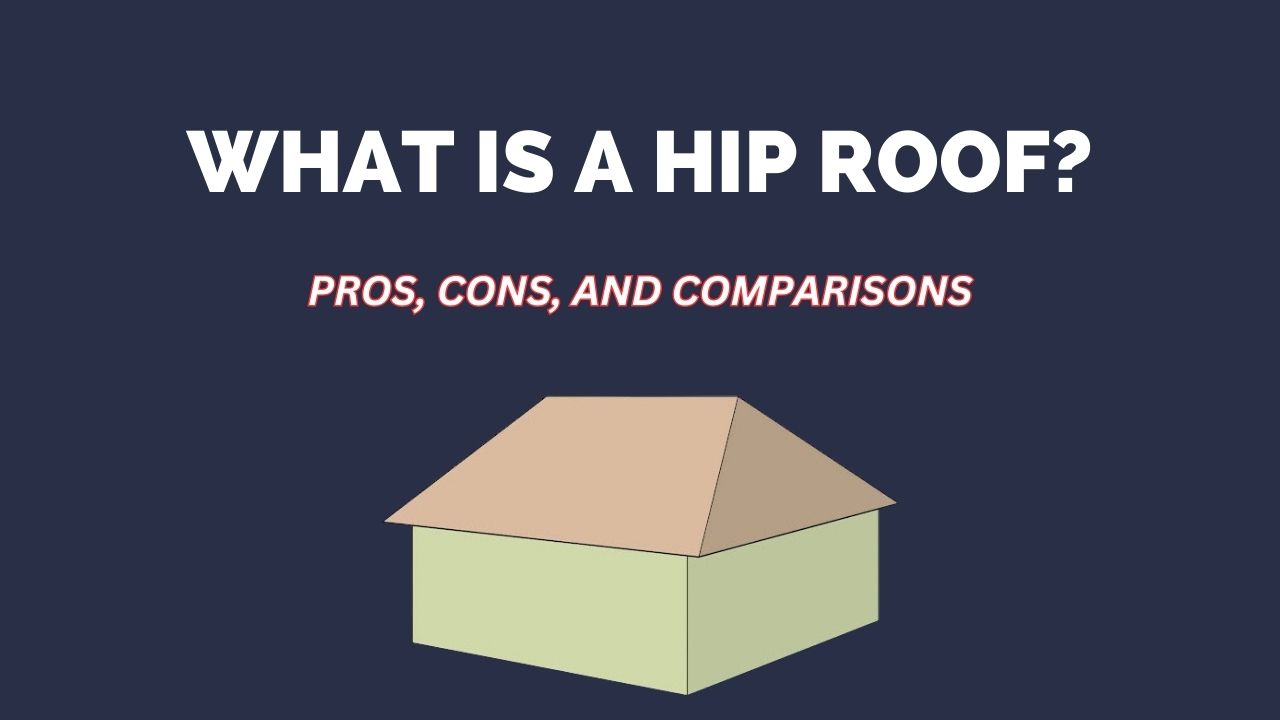
A hip roof is a staple of American architecture. From suburban ranch homes to modern builds, you’ll see its signature sloped silhouette everywhere. It’s popular because it doesn't just look balanced—it's engineered to handle the toughest weather.
In this guide, we’ll break down how hip roofs work, the different types you can build, and whether the extra cost is actually worth it for your project.
What Exactly Is a Hip Roof?
Unlike a standard Gable Roof (which has two sloped sides and two flat vertical walls called gables), a Hip Roof slopes down on all four sides. These sides meet at the top to form a ridge or a single peak.
The "Hip" Secret: The "hip" is the external angle where two adjacent sloping sides meet. Because there are no flat vertical faces, wind flows over the roof rather than hitting it like a wall, making it incredibly stable.
Anatomy of a Hip Roof
To understand the complexity of the build, you need to know the terminology.
- Ridge: The highest horizontal point where the roof planes meet.
- Hip Rafter: The diagonal board that runs from the ridge to the corner of the walls.
- Common Rafters: The boards that run straight from the ridge to the eaves.
- Jack Rafters: Shorter rafters that connect a hip rafter to the wall plate (the "short ribs" of the roof).
- Eaves: The edges of the roof that overhang the walls, providing shade and water protection.
Common Types of Hip Roofs
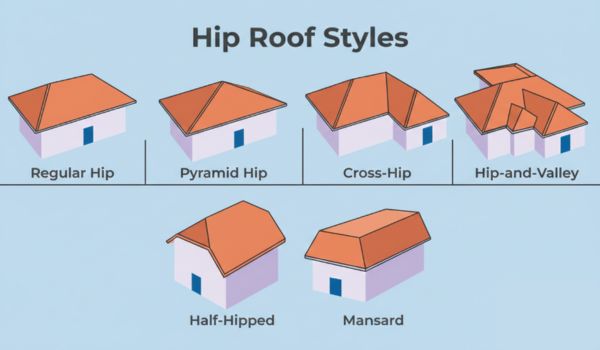
Not every hip roof follows the same blueprint. Depending on the footprint of your house, you might choose one of these:
- Simple Hip: The classic "tent" look with a ridge at the top and four sloping sides.
- Pyramid Hip: All four sides are equal triangles that meet at a single point (no ridge). This is perfect for square buildings or gazebos.
- Cross Hip: Used on L-shaped or T-shaped homes. It’s essentially two hip roofs joined together, creating "valleys" where the sections meet.
- Half-Hip (Jerkinhead): A hybrid that starts like a gable roof but has the top "clipped" off into a small hip. It provides a unique look and extra wind resistance.
Here’s how a hip roof compares to other popular roof styles.
Hip Roof vs Gable Roof
| Feature | Hip Roof | Gable Roof |
|---|---|---|
| Sides | All sides slope | Two sloping sides |
| Wind resistance | Very strong | Weaker in storms |
| Cost | Higher | Lower |
| Attic space | Less | More |
| Look | Balanced | Traditional |
Hip Roof vs Flat Roof
| Feature | Hip Roof | Flat Roof |
|---|---|---|
| Drainage | Excellent | Poor |
| Maintenance | Lower | Higher |
| Weather resistance | Strong | Weak |
| Common use | Homes | Commercial buildings |
The Pros and Cons: Is It Right for You?
Why Homeowners Love Them (The Pros)
- Hurricane Hero: Because all sides are sloped, hip roofs are much harder for high winds to "lift" off the house compared to gables.
- Better Drainage: Water and snow slide off all four sides, reducing the chance of pooling.
- Curb Appeal: They offer a more "expensive," low-profile look that fits well with Craftsman and Ranch-style homes.
The Trade-offs (The Cons)
- Higher Price Tag: Expect to pay 10–20% more than a gable roof. Why? It requires more rafters, more complex cuts, and more roofing material.
- Less "Headroom": The four-way slope eats into your attic space. If you want a finished "bonus room" upstairs, a hip roof makes it difficult.
- Leak Risk: While they drain well, the "valleys" and "hips" require more flashing. If not installed perfectly, these seams are potential leak points.
Material Lifespan & Performance
Since you’re looking at long-term durability, the material you choose matters as much as the shape.
| Material | Average Lifespan | Best For... |
| Asphalt Shingles | 20–30 Years | Budget-friendly builds |
| Metal Roofing | 40–70 Years | High-wind and fire-prone areas |
| Clay/Concrete Tiles | 50+ Years | Mediterranean or Southwest styles |
| Slate | 75–100 Years | Luxury, "forever" homes |
When to Choose a Hip Roof
If you are building in a coastal area or an open plain where high winds are common, a Hip Roof is the superior choice for safety. However, if you are looking for the most affordable way to get an extra bedroom in the attic, a Gable Roof might serve you better.
Pro Tip: If you're calculating materials for a hip roof, remember that you will have more "waste" material (shingle scraps) because of the diagonal cuts needed along the hip rafters.
Final Thoughts
A hip roof is a strong, reliable, and popular roofing style in the United States. Its four sloping sides make it stable in bad weather and visually appealing. While it costs more and offers less attic space, it makes up for it with durability and performance.