What Is Roof Decking?
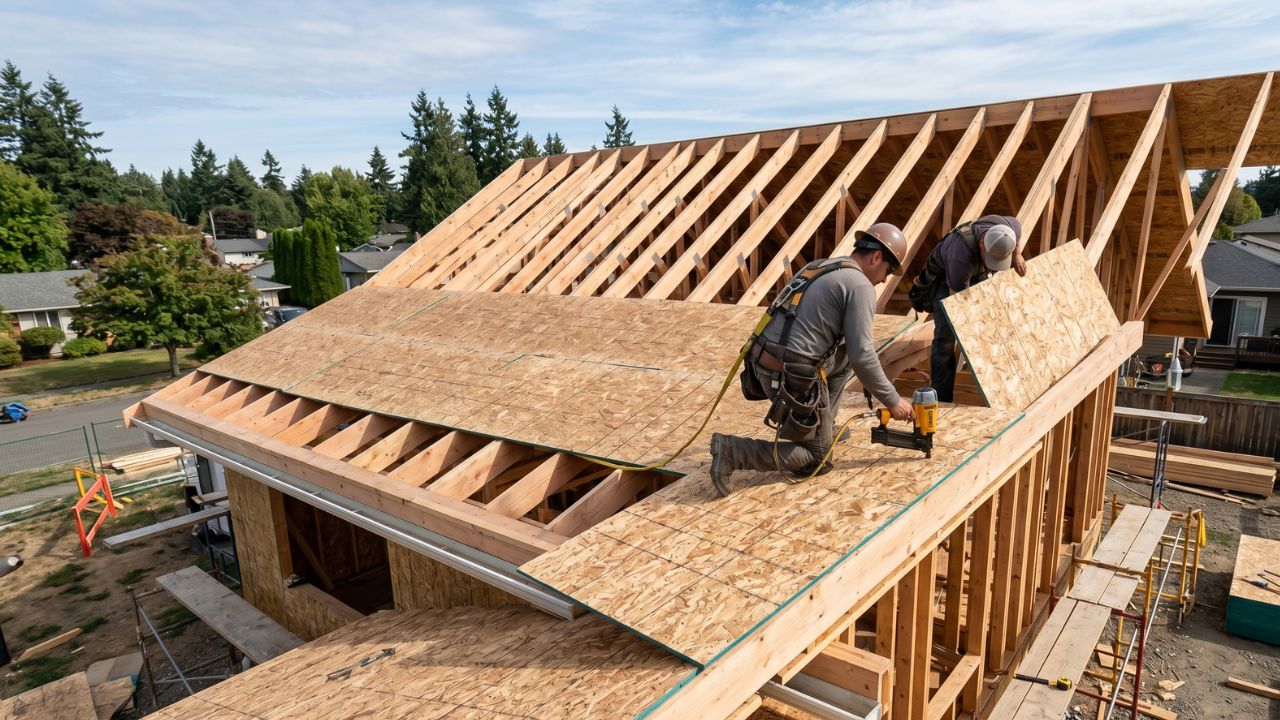
Roof decking also called roof sheathing is the flat board surface that sits on top of your home's roof frame (the rafters or trusses). Think of it as the foundation of your roof. Everything else the underlayment, felt paper, and shingles — gets installed on top of the decking.
When people think about their roof, they usually picture shingles. But underneath those shingles is a layer that most homeowners never see — and it might just be the most important part of your entire roof. It's called roof decking, and without it, your roof simply wouldn't work.
Let's break down what roof decking is, why it matters, and what you need to know about it as a homeowner.
What Is Roof Decking?
Roof decking — also called roof sheathing — is the flat board surface that sits on top of your home's roof frame (the rafters or trusses). Think of it as the foundation of your roof. Everything else — the underlayment, felt paper, and shingles — gets installed on top of the decking.
In simple terms, roof decking is the solid "floor" of your roof. It ties the roof frame together, gives the shingles something to attach to, and helps the entire structure stay strong.
What Is Roof Decking Made Of?
Most modern homes use one of two main materials for roof decking:
Plywood: Plywood is made by gluing thin layers of wood together. It's been used in roofing for decades because it's strong, holds nails well, and handles moisture better than some other materials. It comes in large sheets — usually 4 feet by 8 feet — and is available in different thicknesses.
OSB (Oriented Strand Board): OSB is the most common roof decking material used today. It's made by pressing and gluing together small wood strands in different directions. OSB is slightly less expensive than plywood but just as strong for most roofing purposes. It's what you'll find on the majority of new homes built in the last 20 to 30 years.
Older Materials: In older homes, you might find roof decking made from wooden planks or boards nailed side by side across the rafters. This is called "skip sheathing" or "board sheathing" and was common before plywood became widely available.
How Thick Should Roof Decking Be?
The thickness of your roof decking depends on how far apart your rafters or trusses are spaced.
- Rafters spaced 16 inches apart → decking should be at least ⅜ to ½ inch thick
- Rafters spaced 24 inches apart → decking should be at least ½ to ⅝ inch thick
Thicker decking means a stronger, more solid roof. Most roofing professionals recommend ½ inch as a good standard thickness for most homes.
Why Is Roof Decking So Important?
Roof decking does a lot more than just hold your shingles in place. Here's why it's such a critical part of your roof:
It Supports the Entire Roof: The decking ties all the rafters and trusses together, making the roof structure rigid and stable. Without it, the frame would flex and shift under wind and weather pressure.
It Gives Shingles Something to Grip: Roofing nails need a solid surface to hold onto. Decking provides that surface. If the decking is soft, rotted, or damaged, nails won't hold properly — and shingles can come loose.
It Acts as a Barrier: Roof decking adds an extra layer of protection between the inside of your home and the outside elements. Combined with underlayment, it helps keep moisture, wind, and cold air from sneaking into your attic.
Signs Your Roof Decking May Be Damaged
Because roof decking is hidden under your shingles, problems aren't always easy to spot from the outside. Here are some warning signs to watch for:
Sagging or Uneven Roof Lines — If parts of your roof look like they're dipping or sagging, the decking underneath may be rotting or weakened.
Spongy Feeling When Walking on the Roof — If a roofer or inspector walks on your roof and it feels soft or bouncy underfoot, that's a red flag that the decking has absorbed moisture and started to break down.
Water Stains on Your Ceiling — Leaks that leave brown stains on your ceiling or attic could mean water has gotten through damaged decking.
Visible Rot or Mold in the Attic — If you look up into your attic and see dark stains, mold, or soft wood on the underside of the roof boards, your decking is likely compromised.
When Does Roof Decking Need to Be Replaced?
Roof decking doesn't always need to be replaced when you get a new roof. A good roofing contractor will inspect the decking before installing new shingles and will only replace the sections that are damaged, soft, or rotten.
However, if your decking has widespread water damage or rot, replacing the whole thing is the safer choice. Putting new shingles over bad decking is like painting over a cracked wall — it might look fine at first, but the problem will come back.
The cost to replace roof decking typically runs $70 to $100 per sheet of plywood or OSB, including labor. A full replacement on an average home can add $1,000 to $3,000 to your roofing project, depending on the size of the roof and how much decking needs to go.
The Bottom Line
Roof decking is the solid base layer that makes your entire roof work. It supports the frame, holds your shingles in place, and protects your home from the elements. While you may never see it, it quietly does one of the most important jobs on your house.
If you're getting a new roof or noticing signs of trouble — sagging, leaks, or soft spots — have a trusted roofing professional inspect the decking. Catching a problem early can save you thousands of dollars and keep your home safe and dry for years to come.